(301) 953-1424 • LRASales@laneycompanies.com

(301) 953-1424 • LRASales@laneycompanies.com
As winter tightens its grip on the Mid-Atlantic, construction professionals from Baltimore to Washington, D.C., face the annual challenge of maintaining project momentum in freezing conditions. While cold weather complicates many aspects of a build, the choice of materials in your sub-base and drainage layers remains a critical factor for long-term stability. A common question among Maryland contractors is whether recycled materials can truly stand up to the harsh freeze-thaw cycles of a local winter. The short answer: yes.
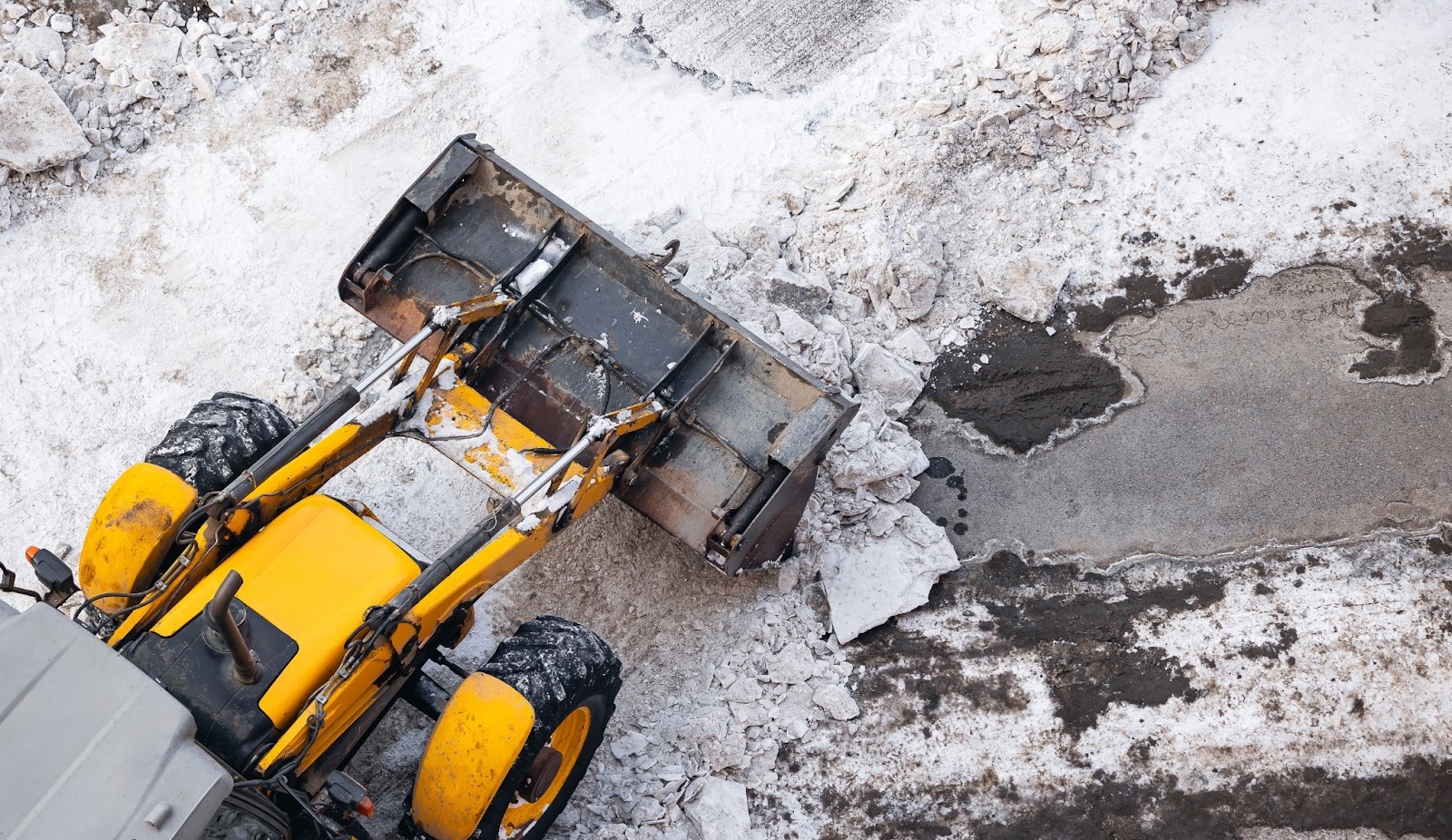
One of the primary concerns in winter construction is frost heave, which occurs when moisture in the soil freezes and expands. Recycled concrete aggregates are inherently resilient to these shifts because they have already undergone a lifetime of curing and hardening. When used as a road base, high-quality materials provide a rigid, interlocking structure that resists the internal
Superior Drainage
Effective drainage is the most critical defense against winter damage. Standing water that freezes beneath a driveway or walkway is a direct cause of cracks and structural failure. Recycled aggregates, particularly larger sizes, create natural voids that allow water to flow away from the surface quickly. This keeps the subgrade dry and prevents the formation of “ice lenses” that cause buckling.
Winter job sites are notoriously unstable during the “mid-day thaw,” when frozen ground softens and creates deep mud. This instability can turn a site into a logistical nightmare, leading to stuck equipment. Recycled aggregates offer superior compaction compared to many virgin materials, providing a sturdy working platform that supports the weight of cranes and loaders.
Budgeting for winter projects often involves unexpected expenses, such as snow removal and heating. Switching to recycled aggregates is a strategic way to lower material costs without sacrificing quality. Because Laney Recycling and Aggregates (LRA) processes these materials locally in Laurel, we can offer competitive rates that help your bottom line while helping your project earn valuable LEED points.
Navigating the technical requirements of local jurisdictions in the Baltimore-Washington corridor requires a supplier who understands the rules. At LRA, our recycled products are approved by most local jurisdictions and are meticulously screened to remove rebar, soil, and debris, ensuring a clean result every time.
The performance of your project should never be a gamble based on the weather. By choosing high-quality recycled aggregates, you are investing in a material proven to handle the pressure and temperature swings of a Maryland winter. If you are ready to secure a stable foundation for your next project, the team at LRA is ready to help. We are committed to delivering the precise aggregate you need to keep your site safe and your project moving forward, regardless of how low the temperature drops. Contact us for pricing and availability today.
Prince George's County: Bowie (20715, 20716, 20720, 20721), Beltsville (20705), Adelphi (20783), College Park (20740,20742), Greenbelt (25689), Hyattsville (20781, 20782, 20783, 20784), Landover (20785), Laurel (20707, 20723), Springdale (20774), Upper Marlboro (20772, 20774), Woodlawn (21207).
Montgomery County: Olney (20832), Damascus (20872), Laytonsville (20882), Silver Spring (20910), Clarksburg (20871), Gaithersburg (20878), Germantown (20876), Bethesda (20816), Chevy Chase (20815), and more.
Howard County: Elkridge (21075), Ellicott City (21043), Fulton (20759), Glenelg (21737), Glenwood (21738), Granite (21163), Hanover (21076), Clarksville (21029), Columbia (21044), Cooksville (21723), Dorsey (21075), Highland (20777), Jessup (20794), Lisbon (21765), Marriottsville (21104), North Laurel (20723), West Friendship (21794), Woodbine (21797), Woodstock (21163), and more.
Anne Arundel County: Annapolis (21401, 21403, 21409), Arnold (21012), Crofton (21114), Crownsville (21032), Gambrills (21054), Glen Burnie (21060, 21061), Hanover (21076), Jessup (20794), Pasadena (21122), Severn (21144), Severna Park (21146).
Baltimore County: Arbutus (21227), Catonsville (21228, 21250), Lansdowne (21227), Lochearn (21207), Cockeysville (21030, 21031, 21065), Dundalk (21222), Pikesville (21208), Randallstown (21133), Reisterstown (21136), Edgemere (21219), Essex (21221), Garrison (21055), Lutherville (21093), Middle River (21220), Milford Mill (21244), Overlea (21236), Owings Mills (21117), Parkville (21234), Park Heights (21215), Rosedale (21237), Timonium (21093), Towson (21204), White Marsh (21162), Woodlawn (21207), and more.
Carroll County: Eldersburg (21784), Finksburg (21048), Hampstead (21074), Manchester (21102), Marriottsville (21104), Taneytown (21787), Union Bridge (21791), Westminster (21157, 21158), Mount Airy (21771), New Windsor (21776), Sykesville (21784), Woodbine (21797), Taneytown (21787), and more.
Frederick County: Frederick (21701, 20702, 21703, 21709), New Market (21774) , Mount Airy (21771), Urbana (21704), Ijamsville (21754), Walkersville (21793), Libertytown (21762), Damascus (20872), and more.
Washington, DC and Northern Virginia
St. Mary's County: Leonardtown (20650), Mechanicsville (20659), Lexington Park (20653), Piney Point (20674), Tall Timbers (20690)
Calvert County: Dunkirk (20754), Chesapeake Beach (20732), North Beach (20714), Prince Frederick (20678), Owings (20736), Solomons (20688).
Charles County: La Plata (20646), Port Tobacco (20677), Rock Point (20682), Waldorf (20601, 20602, 20603)
©2026 The Recycling Center, All Rights Reserved.
Site Designed and Developed by: Advantage Internet Marketing