(301) 953-1424 • LRASales@laneycompanies.com

(301) 953-1424 • LRASales@laneycompanies.com
Managing a commercial property or job site in Maryland requires a delicate balance between public safety and environmental stewardship. As we move into 2026, the standards for “smart salting” have become more rigorous, driven by new state certifications and a better understanding of how excess chloride impacts our local waterways. Many facility managers still operate under the “more is better” myth, but over-application doesn’t just waste money, it damages concrete, kills landscaping, and can lead to regulatory penalties.
At Laney Recycling and Aggregates (LRA), we’ve spent decades supplying the Baltimore-Washington corridor with high-quality aggregates and winter materials. We know that effective ice control in 2026 isn’t about the volume of salt you spread; it’s about precision, timing, and using the right professional-grade products for the specific Maryland weather at hand.
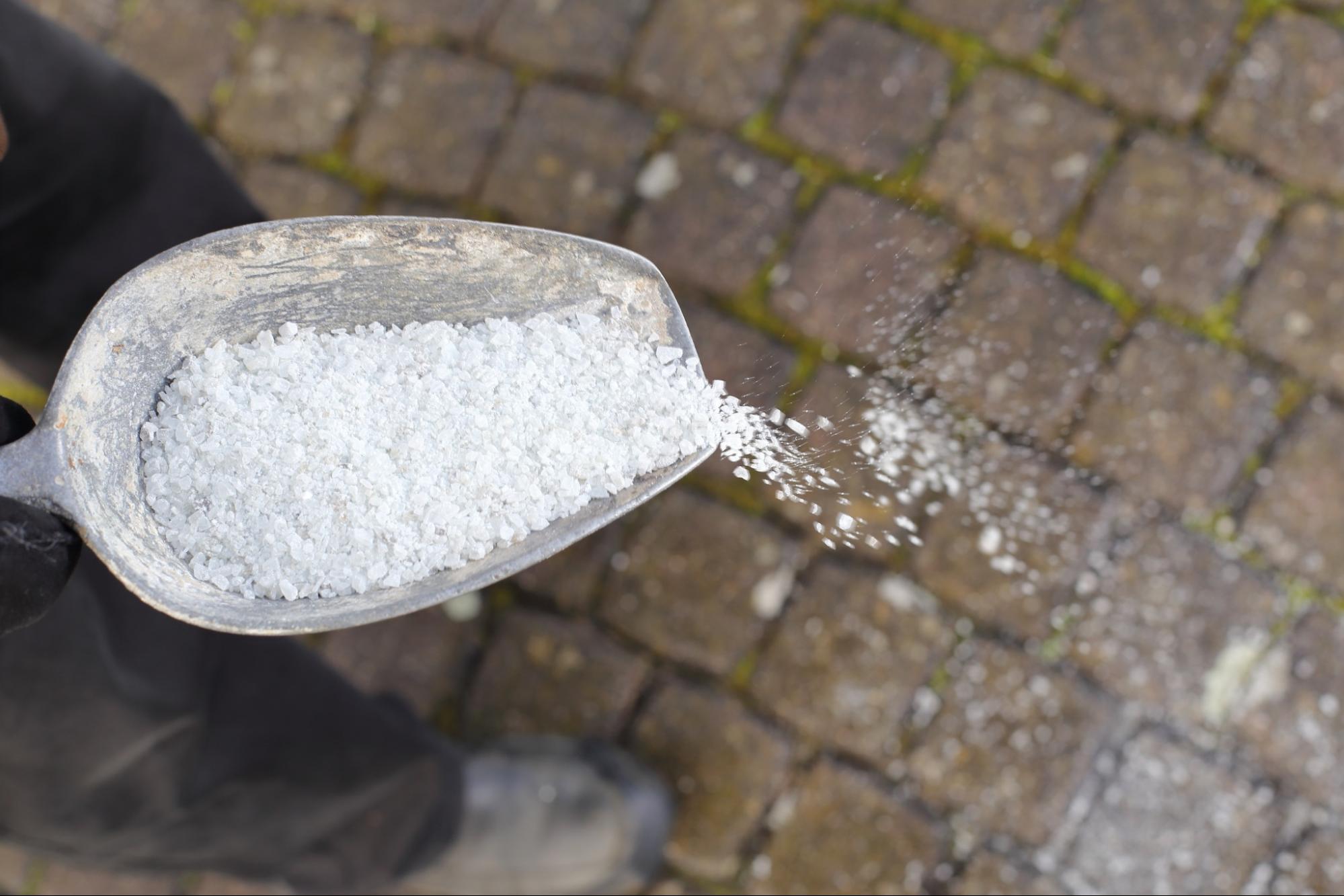
Here are five essential steps to determine how much salt you really need for effective ice control.
The most common mistake in ice control is creating “salt piles” that sit long after the ice has melted. For standard rock salt (sodium chloride), the goal is to have the granules spaced out rather than touching. In fact, a 12-ounce coffee mug of salt is typically enough to treat 10 sidewalk squares or a 20-foot driveway. By applying salt thinly and evenly, you allow the granules to create a brine that spreads across the surface, melting more ice with less physical product. Avoid the surprise by:
One of the key shifts in 2026 winter maintenance is the reliance on infrared pavement thermometers. Rock salt becomes significantly less effective, and eventually useless, once pavement temperatures drop below 15°F. Spreading standard salt in extreme sub-zero Maryland nights is essentially throwing money away, as the salt cannot create the necessary brine to start the melting process. Understanding the “thermal window” of your product ensures you aren’t over-applying a material that isn’t chemically capable of working. A better approach:
A functional winter plan always puts the plow and the shovel before the salt bag. Salt is designed to break the bond between the ice and the pavement, not to “melt away” inches of standing snow. If you apply salt on top of three inches of snow, you create a “slush sandwich” that is twice as hard to remove and requires significantly more chemical intervention. In Maryland, where heavy, wet snow is common, manual clearing is your most cost-effective tool. Consider questions such as:
Over-salting has a “cascading” negative effect on your property’s value. Excess salt seeps into porous concrete and masonry, causing “spalling” or surface scaling when it goes through freeze-thaw cycles. Furthermore, the runoff from Maryland parking lots flows directly into the Chesapeake Bay watershed, where a single teaspoon of salt can permanently pollute five gallons of fresh water. Using the correct amount of salt is an environmental necessity that also protects your physical investment. Avoid the surprise by:
In 2026, the Maryland Department of the Environment (MDE) will place a higher emphasis on certified salt applicators and professional oversight. Working with a supplier that understands these shifting regulations and material specs is vital for staying compliant and within budget. LRA provides the high-quality winter materials and expertise needed to manage commercial-scale ice control without the waste. Working with LRA gives you access to:
Using the right amount of salt is the best insurance policy you can have for your business’s budget and infrastructure. When you take the time to measure your application and monitor temperatures now, you avoid the costly concrete repairs and environmental liabilities that plague so many facilities in the spring.
If you’re looking to secure your winter materials or need a strategic partner for your commercial aggregate needs, LRA is here to assist. Our team will guide you through every step of the procurement process to ensure your property stays safe and compliant all winter long.
Ready to get your winter materials? Contact us today.
Prince George's County: Bowie (20715, 20716, 20720, 20721), Beltsville (20705), Adelphi (20783), College Park (20740,20742), Greenbelt (25689), Hyattsville (20781, 20782, 20783, 20784), Landover (20785), Laurel (20707, 20723), Springdale (20774), Upper Marlboro (20772, 20774), Woodlawn (21207).
Montgomery County: Olney (20832), Damascus (20872), Laytonsville (20882), Silver Spring (20910), Clarksburg (20871), Gaithersburg (20878), Germantown (20876), Bethesda (20816), Chevy Chase (20815), and more.
Howard County: Elkridge (21075), Ellicott City (21043), Fulton (20759), Glenelg (21737), Glenwood (21738), Granite (21163), Hanover (21076), Clarksville (21029), Columbia (21044), Cooksville (21723), Dorsey (21075), Highland (20777), Jessup (20794), Lisbon (21765), Marriottsville (21104), North Laurel (20723), West Friendship (21794), Woodbine (21797), Woodstock (21163), and more.
Anne Arundel County: Annapolis (21401, 21403, 21409), Arnold (21012), Crofton (21114), Crownsville (21032), Gambrills (21054), Glen Burnie (21060, 21061), Hanover (21076), Jessup (20794), Pasadena (21122), Severn (21144), Severna Park (21146).
Baltimore County: Arbutus (21227), Catonsville (21228, 21250), Lansdowne (21227), Lochearn (21207), Cockeysville (21030, 21031, 21065), Dundalk (21222), Pikesville (21208), Randallstown (21133), Reisterstown (21136), Edgemere (21219), Essex (21221), Garrison (21055), Lutherville (21093), Middle River (21220), Milford Mill (21244), Overlea (21236), Owings Mills (21117), Parkville (21234), Park Heights (21215), Rosedale (21237), Timonium (21093), Towson (21204), White Marsh (21162), Woodlawn (21207), and more.
Carroll County: Eldersburg (21784), Finksburg (21048), Hampstead (21074), Manchester (21102), Marriottsville (21104), Taneytown (21787), Union Bridge (21791), Westminster (21157, 21158), Mount Airy (21771), New Windsor (21776), Sykesville (21784), Woodbine (21797), Taneytown (21787), and more.
Frederick County: Frederick (21701, 20702, 21703, 21709), New Market (21774) , Mount Airy (21771), Urbana (21704), Ijamsville (21754), Walkersville (21793), Libertytown (21762), Damascus (20872), and more.
Washington, DC and Northern Virginia
St. Mary's County: Leonardtown (20650), Mechanicsville (20659), Lexington Park (20653), Piney Point (20674), Tall Timbers (20690)
Calvert County: Dunkirk (20754), Chesapeake Beach (20732), North Beach (20714), Prince Frederick (20678), Owings (20736), Solomons (20688).
Charles County: La Plata (20646), Port Tobacco (20677), Rock Point (20682), Waldorf (20601, 20602, 20603)
©2026 The Recycling Center, All Rights Reserved.
Site Designed and Developed by: Advantage Internet Marketing